
Since 2018 sports betting has gone from a Nevada curiosity to something advertised during almost every college football and NBA broadcast in the United States. Whether you bet or not, the odds are worth understanding: they are a real-time probability forecast, set by bookmakers and shaped by money from millions of fans, and they hide a fee that most people never notice.
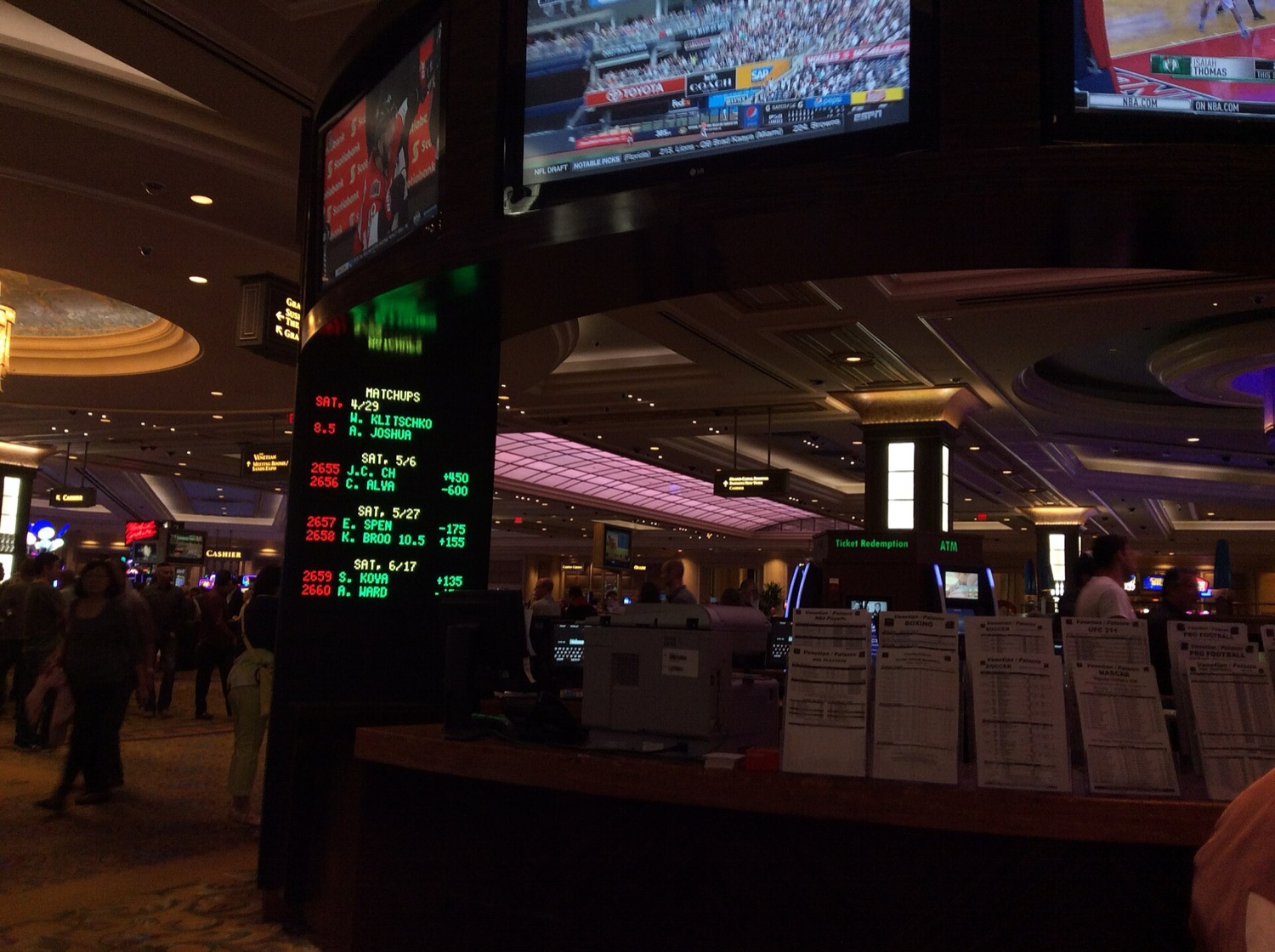
Three ways to write the same price
| Format | Example | Meaning | Implied probability |
|---|---|---|---|
| American (favourite) | −150 | Bet $150 to win $100 | 150 ÷ 250 = 60% |
| American (underdog) | +150 | Bet $100 to win $150 | 100 ÷ 250 = 40% |
| Decimal | 2.50 | Total return per $1, stake included | 1 ÷ 2.50 = 40% |
| Fractional | 3/2 | Win $3 for every $2 staked | 2 ÷ 5 = 40% |
Underdog (+X): probability = 100 ÷ (X + 100)
The vig: the bookmaker's built-in fee
Take a typical point-spread bet where both sides are priced at −110. Each side implies a probability of 110 ÷ 210, or 52.38 percent. Add them together and you get 104.76 percent, not 100. That extra 4.76 percent is the overround, and it is how the bookmaker gets paid. It is called the vig (short for vigorish) or the juice.
If the book takes equal money on both sides, it pays out $210 to the winners for every $220 it collects, keeping $10, a hold of about 4.5 percent. For a bettor, the consequence is stark: at −110 you must win 52.38 percent of your bets just to break even. Picking winners half the time is not enough.
Point spreads, moneylines and totals
- Point spread: the favourite must win by more than the spread. If a team is −7.5, it must win by 8 or more for the bet to win.
- Moneyline: simply who wins the game, with the price reflecting each team's chance.
- Totals (over/under): whether the combined score is above or below a number.
- Futures: who wins a title months away. Margins here are much higher, because the book adds a little to every team in a big field.
- Parlays: several bets combined, all of which must win. The payouts look huge, but the bookmaker's margin compounds with every leg, so parlays are among the most profitable products for sportsbooks.
A real example from March Madness
Before the 2013 NCAA tournament, eight teams were priced between +500 and +800 to win the title, implied probabilities of between 11 and 17 percent each. Add up every team in the field and the total came to far more than 100 percent: that surplus is the futures vig. Louisville, at +700 (12.5 percent), went on to win. Our 2013 Selection Sunday preview shows the full table, and a neat lesson: even the favourite had well under a one-in-five chance.

Why most bettors lose, and what sharp bettors do differently
Because of the vig, the average bettor loses a few percent of everything they wager over time, much like a casino game. A small number of professional bettors win by finding prices that are wrong, often by building statistical models, shopping between several sportsbooks for the best number, and betting early before lines move. Their key measure is closing line value: consistently getting a better price than the final odds at kick-off is the clearest sign of genuine skill, more reliable than short-term profit.
Where it is legal
In May 2018, in Murphy v. National Collegiate Athletic Association, the US Supreme Court struck down the federal law that had confined full sports betting to Nevada. States have since made their own rules, and most now allow sports betting in some form. Details differ widely:
- The minimum age is 21 in most states.
- Some states ban bets on their own in-state college teams, or on college games played in the state.
- A growing number of states have banned prop bets on individual college players, after concerns about harassment of student-athletes.
- Several large states, including California and Texas, had not legalised sports betting at the time of writing.
In the UK, betting is regulated by the Gambling Commission, and in Ireland by the new Gambling Regulatory Authority. If you are a college athlete, coach or athletics staff member, NCAA rules strictly prohibit betting on college sports, and the rules on professional sports have been under review, so check the current NCAA bylaws and your athletics department before placing any bet.
Try it: a game is priced Team A −200, Team B +170. Implied probabilities are 66.7 percent and 37.0 percent, a total of 103.7 percent. The overround is 3.7 percent. Which side would you need to think is more likely than the price says before betting?
For the maths behind the house's advantage in casino games, see house edge explained; to set a sensible limit on what you spend, see budgeting your entertainment money.